Caring for Leather Footwear Through the Monsoon
Leather and Maharashtra rain do not get along. Here is how to keep chappals, mojadis and formal shoes alive from June to September.
Every year, around July, customers come in with a pair of good leather chappals that are stiff, cracked and pale. Almost always the same story: they got soaked, then dried in the sun. Leather survives rain. It does not survive being dried badly.
Rule one: never dry leather in direct sun or near heat
Sunlight and heaters pull the natural oils straight out of the hide. The leather shrinks, hardens and cracks along the flex lines. Instead, wipe the pair with a dry cloth, stuff it loosely with newspaper to hold its shape and pull moisture out, and leave it in a shaded, airy corner. Change the newspaper after a few hours.
Rule two: oil it once a month
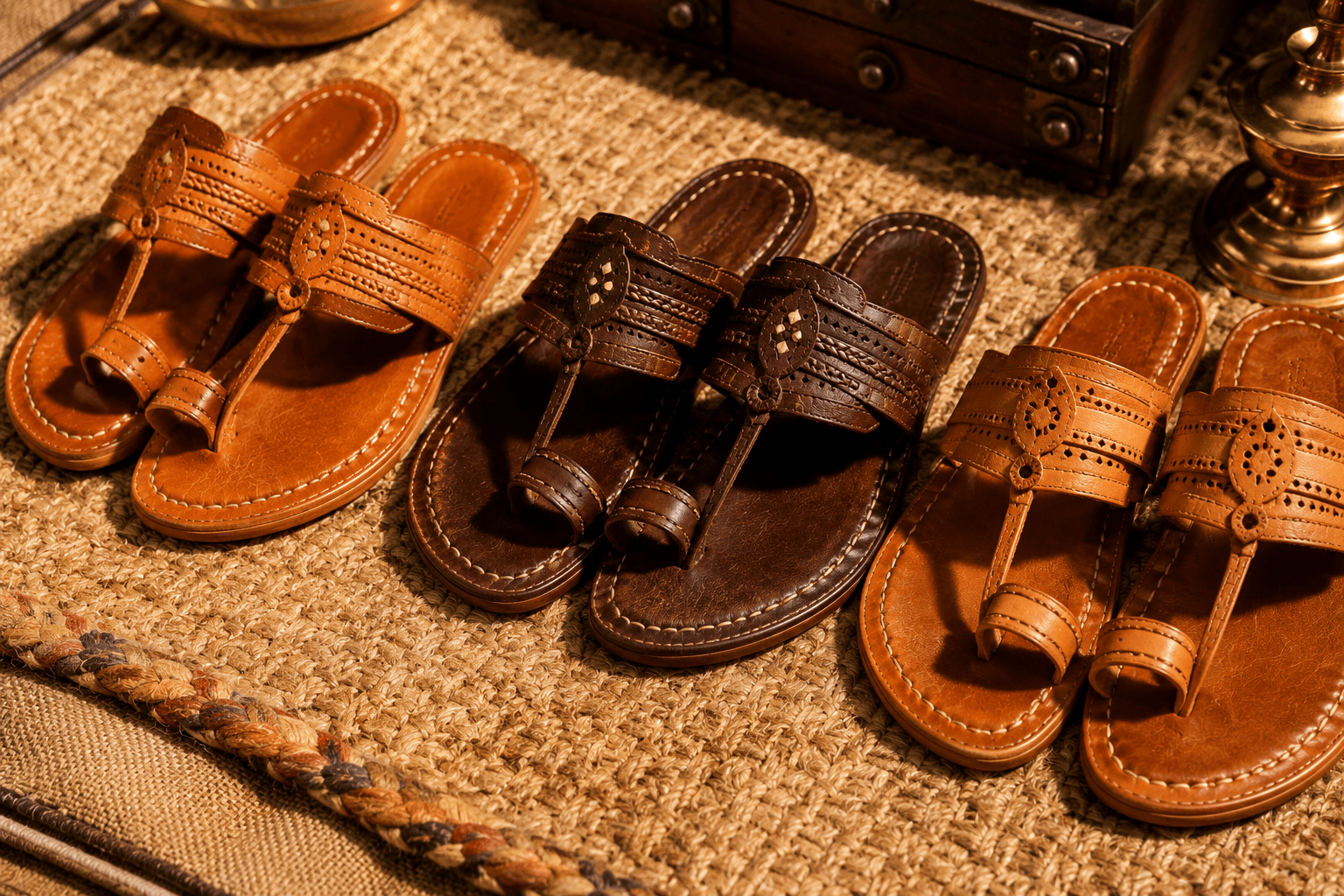
A little castor oil or plain coconut oil, rubbed in with your fingers and left overnight, keeps the leather supple. Do this once a month through the year, and once a fortnight during the monsoon. It also deepens the colour of tan Kolhapuris, which most people end up preferring.
Rule three: rotate your pairs
Leather needs a full day to dry out from the inside after being worn. Wearing the same pair every single day, especially in humid weather, is what makes footwear smell and what breaks down the insole early. Two pairs alternated will together outlast three pairs worn one at a time.
Keep a monsoon pair
The honest advice: keep a rubber or EVA-soled pair for the worst weeks and save the leather for dry days. A synthetic-strap sandal or a washable sports shoe costs less than repairing a good Kolhapuri, and it takes the punishment better.
Storing them for the season
At the end of the monsoon, clean each pair, oil it, let it dry fully in the shade, and store it in a cloth bag — not a plastic one, which traps moisture and grows fungus. Keep the box in a dry cupboard, away from the wall.
Do this and a genuine leather pair will still be with you five years from now.
Want a recommendation for your feet?
Tell us the occasion, your size and your budget on WhatsApp and we will send you three options from the shelf.